
Last updated November 4, 2026
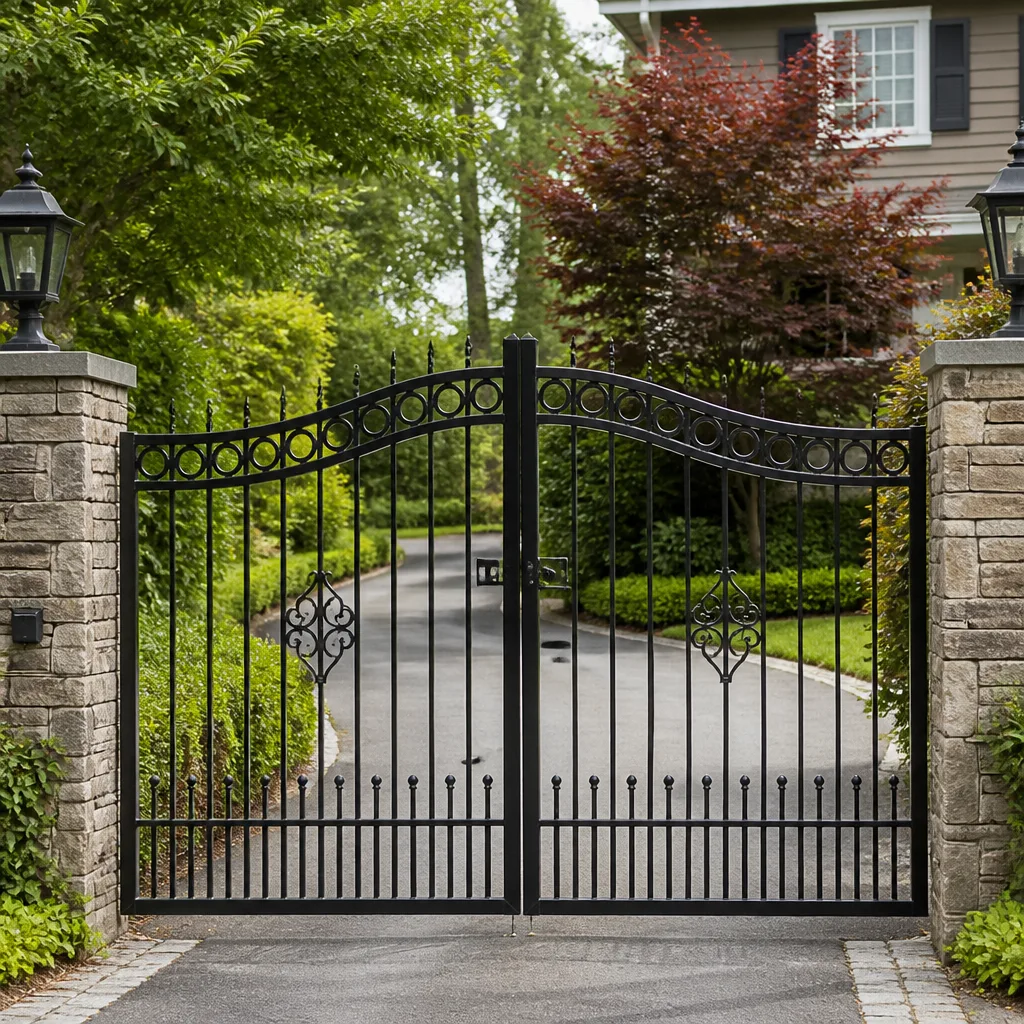 Wrought iron
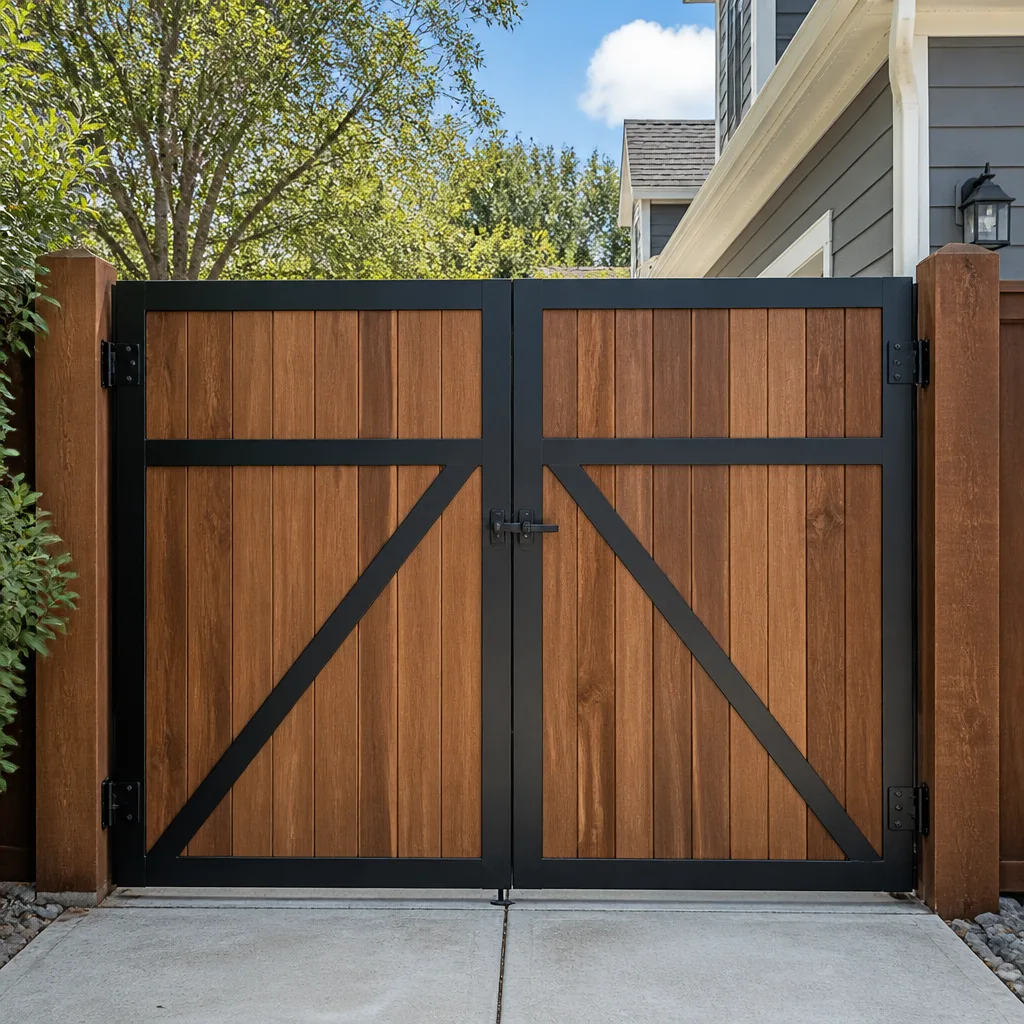 Wood & steel frame
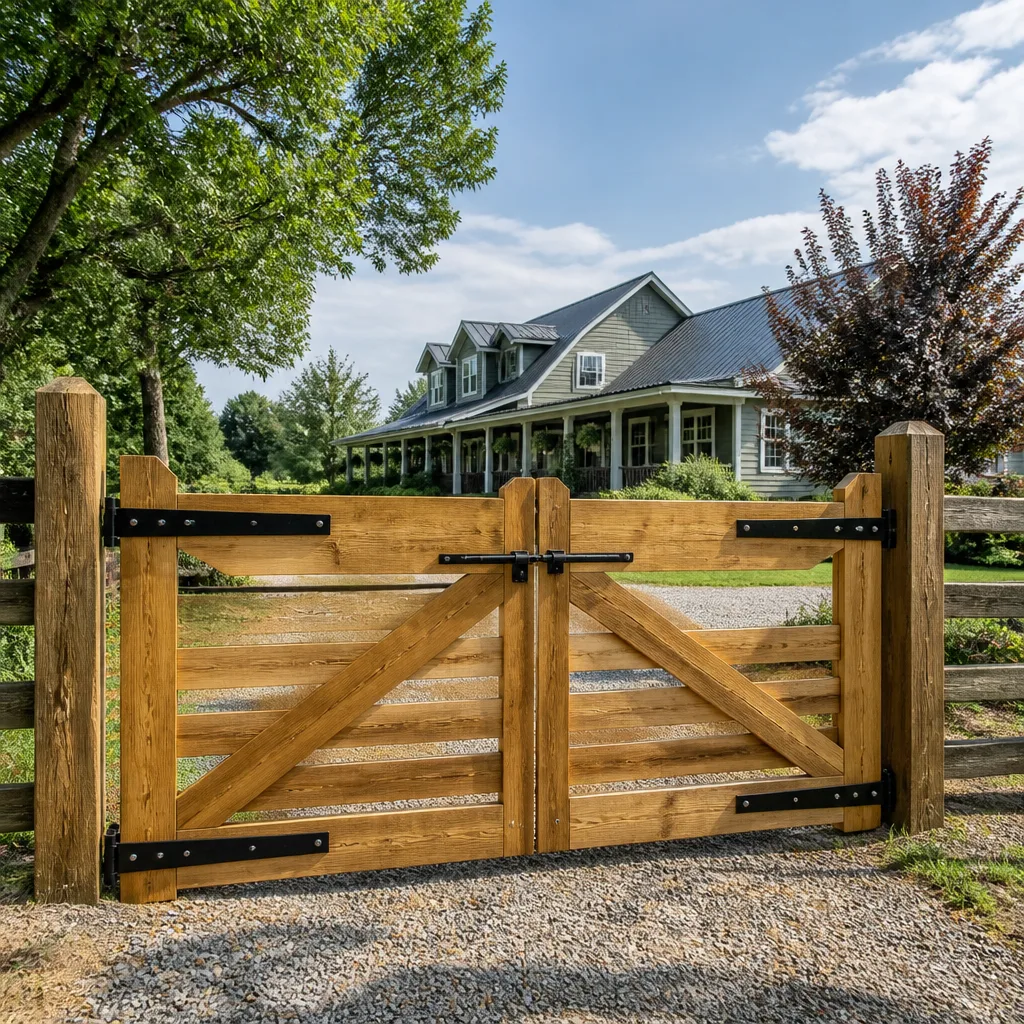 Farm & ranch
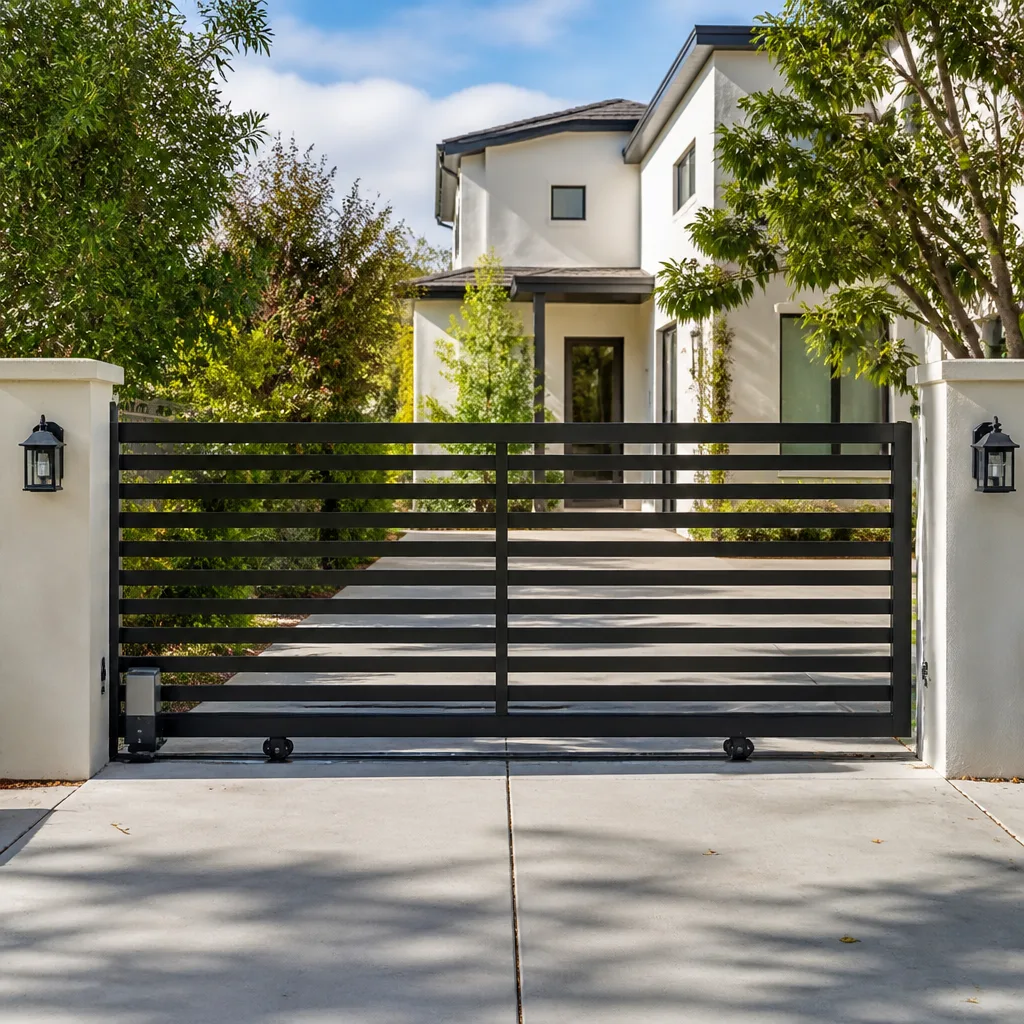 Sliding driveway gates
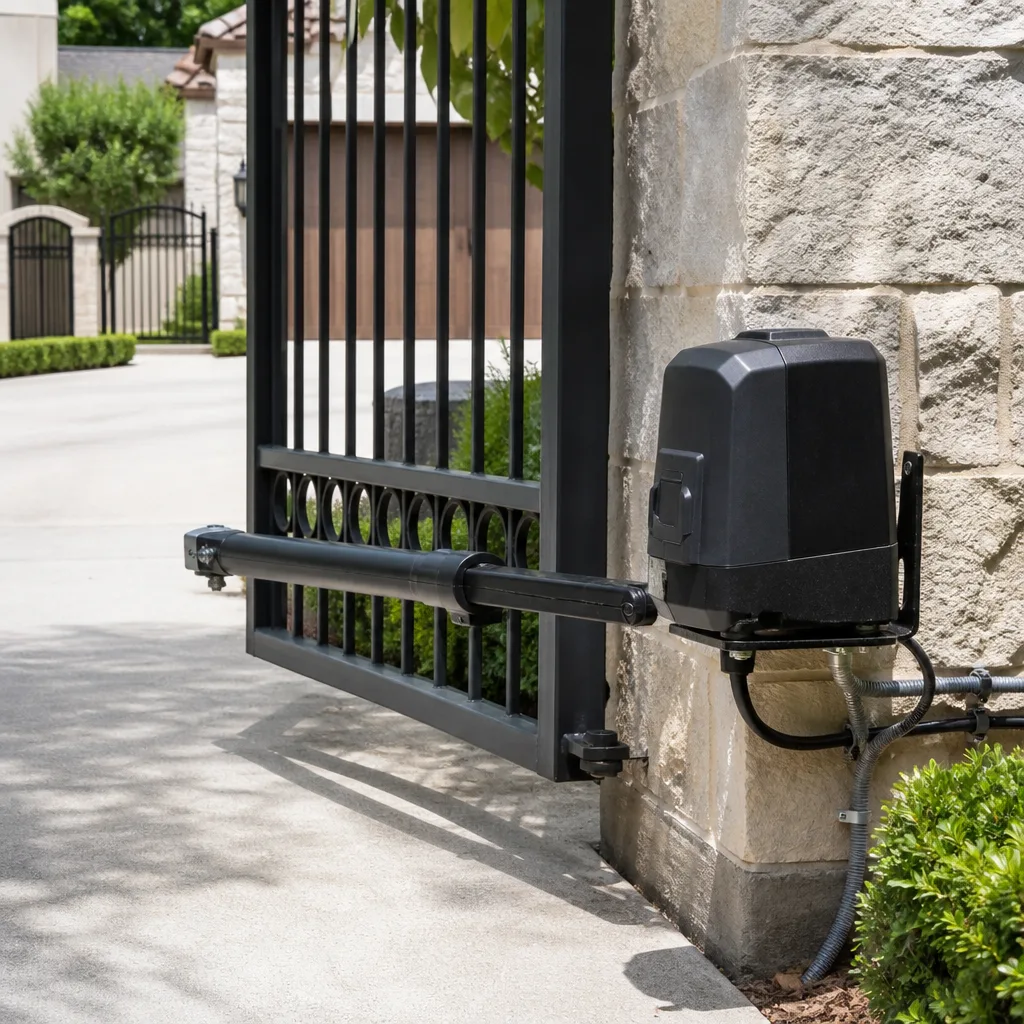 LiftMaster operators
Free on-site gate assessment - hinges, posts, and your LiftMaster or Nice gate operator checked before anything is quoted
The assessment is free and the quote is the invoice.
Get your free estimateThe Complete Guide to Gate Repair in Highland Park
Most gate repair calls in Highland Park aren’t caused by broken parts. They’re caused by site conditions the original installer ignored: uneven terrain, soil movement from seasonal dry-wet cycles, and gates spec’d for flat suburban lots dropped onto sloped driveways. By the time a hinge tears or an operator burns out, the real problem has usually been developing for years. This guide maps every failure category to the specific conditions Highland Park properties actually create, so you know what you’re dealing with before you pick up the phone.
Quick Answer
Gate repair in Highland Park typically involves diagnosing one of three failure categories: electrical faults in the operator or wiring, mechanical wear on hinges and rollers, or structural movement from hillside soil shifts. Most repairs cost between $250 and $1,800 depending on the component, and a specialist can usually identify the root cause on the first visit. The right question isn’t just “what broke?” but “why did it break, and will it break again if I only fix the symptom?”
Styles & brands we work with
- Wrought iron
- Wood & steel frame
- Farm & ranch
- Sliding driveway gates
- LiftMaster operators
Table of Contents
- How Highland Park Terrain Affects Gate Systems
- A Triage Framework: Electrical vs. Mechanical vs. Structural
- Brand-Specific Failure Patterns in Highland Park
- Repair vs. Replacement: The Honest Math
- LA County Code and Historic District Considerations
- What a Proper Gate Diagnostic Actually Looks Like
- Frequently Asked Questions
How Highland Park Terrain Affects Gate Systems
Highland Park sits on a series of hills and gentle slopes that create uneven loading patterns on gate structures. When a swing gate is installed on a slope, the downhill leaf carries more weight than the uphill leaf, which accelerates hinge wear and pulls the frame out of square. Slide gates face a different issue: the track must follow the grade, and if the grade shifts even an inch, the rollers bind and the motor strains against resistance it wasn’t designed for.
We’ve seen gates in the hillside neighborhoods around York Boulevard and Figueroa Street where the post lean is visible from the street. A post that’s off plumb by even two degrees puts the entire gate into a constant bind. The operator compensates by drawing more current, the control board overheats, and eventually something fails. The failure looks electrical. The cause is structural.
Soil movement matters more here than in flat-lot areas. Highland Park’s clay-heavy soil expands during the winter rainy season and contracts through the dry summer months. That cycle works on gate posts like a slow-motion lever. Posts that were set in undersized footings or without proper depth start to drift. The gate still opens, but it doesn’t open the same way twice in a row.
For homeowners and property managers, this means one thing: a gate that’s suddenly hard to open or makes a grinding sound isn’t necessarily a motor problem. It may be the ground beneath the post. A specialist who knows Highland Park terrain will check post alignment, gate leaf level, and track grade before assuming the operator is at fault.
A Triage Framework: Electrical vs. Mechanical vs. Structural
Before you call anyone, you can roughly categorize the problem yourself. This saves time and helps you describe the issue accurately. Here’s the framework we use when triaging calls in Highland Park:
1. Electrical Faults: The Gate Won’t Move At All, or Moves Intermittently
Signs include a dead keypad, a remote that lights up but doesn’t trigger the motor, or a gate that starts and stops erratically. These point to the control board, the operator motor, a limit switch, or low-voltage wiring. They’re also the problems most likely to be misdiagnosed by someone who doesn’t work with automated systems daily.
2. Mechanical Wear: The Gate Moves but Struggles
A gate that grinds, scrapes, sags, or needs a shove is showing mechanical wear. Hinges, rollers, wheels, and chains all have service lives. In Highland Park’s dry climate, bearing grease breaks down faster than in coastal areas because fine dust infiltrates moving parts. That dust mixes with lubricant and forms an abrasive paste that accelerates wear.
3. Structural Failure: The Gate Moves, but Not Square
If the gate leaf hangs at an angle or the gap between leaf and post changes from top to bottom, the problem is structural. The post has shifted, the frame has twisted, or the footing has settled. Replacing the operator on a structurally failed gate is a waste of money. The new motor will fight the same bind the old one did and fail the same way.
Here’s the practical takeaway for any Highland Park property owner: if the problem appeared suddenly after rain, suspect structural movement. If it appeared gradually over months, suspect mechanical wear. If it’s intermittent and seems to have no pattern, suspect electrical.
Brand-Specific Failure Patterns in Highland Park
Different operators fail in different ways. We work on Viking, Ghost Controls, DoorKing, and Elite systems regularly, and each has its characteristic issues. Knowing your brand helps anticipate what’s wrong and whether parts are readily available.
Older estates in the hills above Figueroa Street tend to run DoorKing and Viking operators. These are workhorses, but their control boards are sensitive to voltage irregularities. When a circuit board fails, the motor itself is often fine. Replacing the board is typically a few hundred dollars, where replacing the entire operator is several times that. A technician who recognizes the board failure and doesn’t push a full replacement saves you real money.
Newer builds and mid-century remodels often have Ghost Controls or Elite systems. Ghost Controls solar-compatible operators are popular on properties where running conduit to the gate was impractical. Their batteries and solar panels need periodic attention, and the limit-switch adjustments drift over time. Elite slide gate operators use chains and pulleys that stretch with use. A stretched chain is cheap to adjust and expensive to ignore.
The point isn’t that one brand is better than another. The point is that a specialist arrives knowing the failure modes of your specific system before opening the cover panel. That’s the difference between a first-visit fix and a trial-and-error parts swap.
Repair vs. Replacement: The Honest Math
Every gate reaches a crossover point where continued repair costs more than replacement. Here’s how to think about it:
- Operator age: If the operator is under five years old and the failure is a single component, repair almost always makes sense. If it’s over fifteen years old and multiple components have failed, replacement is usually cheaper in the long run.
- Structural condition of the gate itself: A new operator on a sagging gate only transfers the point of failure. If the steel is rusted through or the frame is racked, the money is better spent on a new gate and operator together.
- Parts availability: Some older control boards are no longer manufactured. A specialist who knows this in advance won’t waste your time sourcing a discontinued part.
- Usage patterns: A gate cycled hundreds of times daily in an HOA or apartment complex wears faster than a single-family gate. Commercial-level traffic often justifies commercial-grade replacement components.
The honest answer is that most gates in Highland Park can be repaired rather than replaced, provided the repair addresses the root cause and not just the broken component. We always tell customers the truth about which side of that line their gate sits on.
LA County Code and Historic District Considerations
Highland Park includes designated Historic Preservation Overlay Zones. If your property falls within a historic district, replacing a gate may require design review before you proceed. The rules generally favor repair over replacement and may restrict materials, height, or style on street-facing gates. Most cities require a permit for new gate installations and for certain types of repair work, so ask your city’s building department what applies to your address.
What many property owners don’t realize is that a gate repair that preserves the existing structure and operator rarely triggers a permit. But a full replacement, a new automated operator, or changes to the driveway approach may. We recommend checking before you commit to a project, especially on properties with historic character near the York Boulevard corridor.
The practical distinction is this: fixing a hinge, replacing a control board, or adjusting a track is maintenance. Replacing the entire gate assembly or adding an automated system where none existed is construction. The former usually stays under the radar. The latter has a process, and it’s better to know that process before you buy materials.
For commercial properties and multi-family gates in Highland Park, LA County safety regulations around automated gates require presence sensors, reverse functions, and periodic testing. A gate that crushes a vehicle or injures a pedestrian because a safety edge was disconnected is a liability no property owner wants. We treat automated gate safety as non-negotiable, not optional.
What a Proper Gate Diagnostic Actually Looks Like
A real diagnostic follows a sequence. It’s not a guess, and it shouldn’t take a full afternoon. Here’s the order a competent gate technician in Highland Park follows:
- Visual survey of the structure: Check post plumb, gate level, hinge condition, and track alignment. If the structure isn’t square, nothing else matters yet.
- Manual operation test: Disconnect the operator and move the gate by hand. A gate that’s heavy or binds when moved manually has a mechanical or structural problem, not an electrical one.
- Electrical system test: Verify power at the outlet, check the transformer, test the battery backup if present, and inspect wiring connections for corrosion or loose terminals.
- Operator function test: Test the motor, limit switches, safety sensors, and control board logic in that order. The board is the last suspect when everything upstream checks out.
- Accessory test: Keypads, remotes, intercom systems, and vehicle sensors each get tested independently. An accessory failure rarely means an operator failure.
- Written diagnosis and estimate: The price is quoted and agreed before any work starts. The written estimate sets the final price.
This order prevents the most common mistake in gate service: replacing an expensive component when a cheap adjustment would have solved the problem. It’s the difference between a troubleshooting process and a parts-swapping exercise.
Electric Gate Repair: What’s Different About It
Electric gate repair is a distinct discipline from manual gate hardware work. The wiring, control boards, and motors interact in ways that require both electrical knowledge and gate-specific experience. A general handyman who’s comfortable changing outlets may be out of their depth inside an operator housing.
The most common electrical failures we see in Highland Park involve low-voltage wiring that’s been damaged by landscape work, motor capacitors that have degraded in the heat, and control boards that have taken voltage spikes. Each has a specific diagnostic signature. A motor that hums but doesn’t turn usually points to a capacitor. A keypad that works intermittently usually points to a wiring connection. A system that works on remote but not on keypad isolates the problem to the keypad circuit or wiring.
Power quality matters. Highland Park’s older electrical services sometimes deliver uneven voltage to outbuildings and detached gate posts. If the operator is on a long circuit run from the house, voltage drop under load can cause intermittent faults that seem to have no explanation. A specialist checks supply voltage before condemning a motor. It’s a five-minute test that saves hundreds of dollars in misdiagnosis.
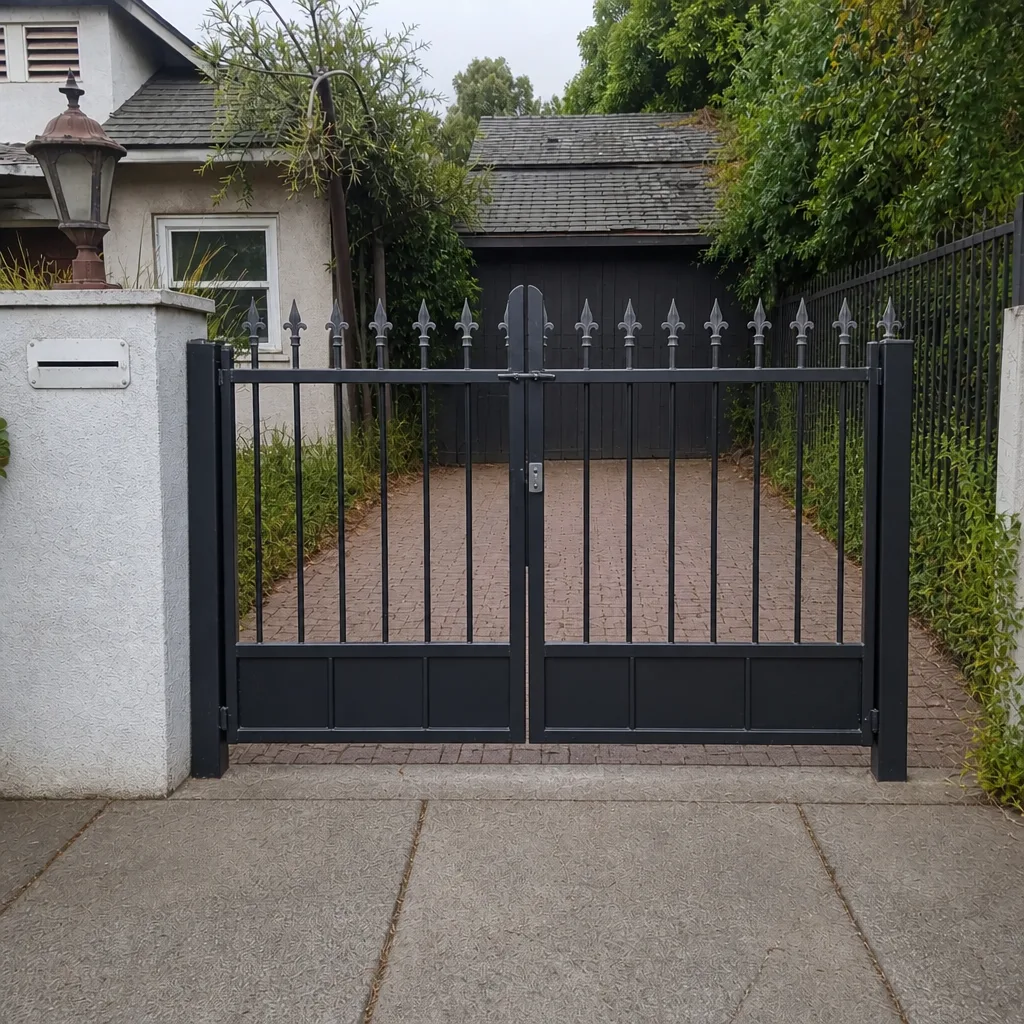
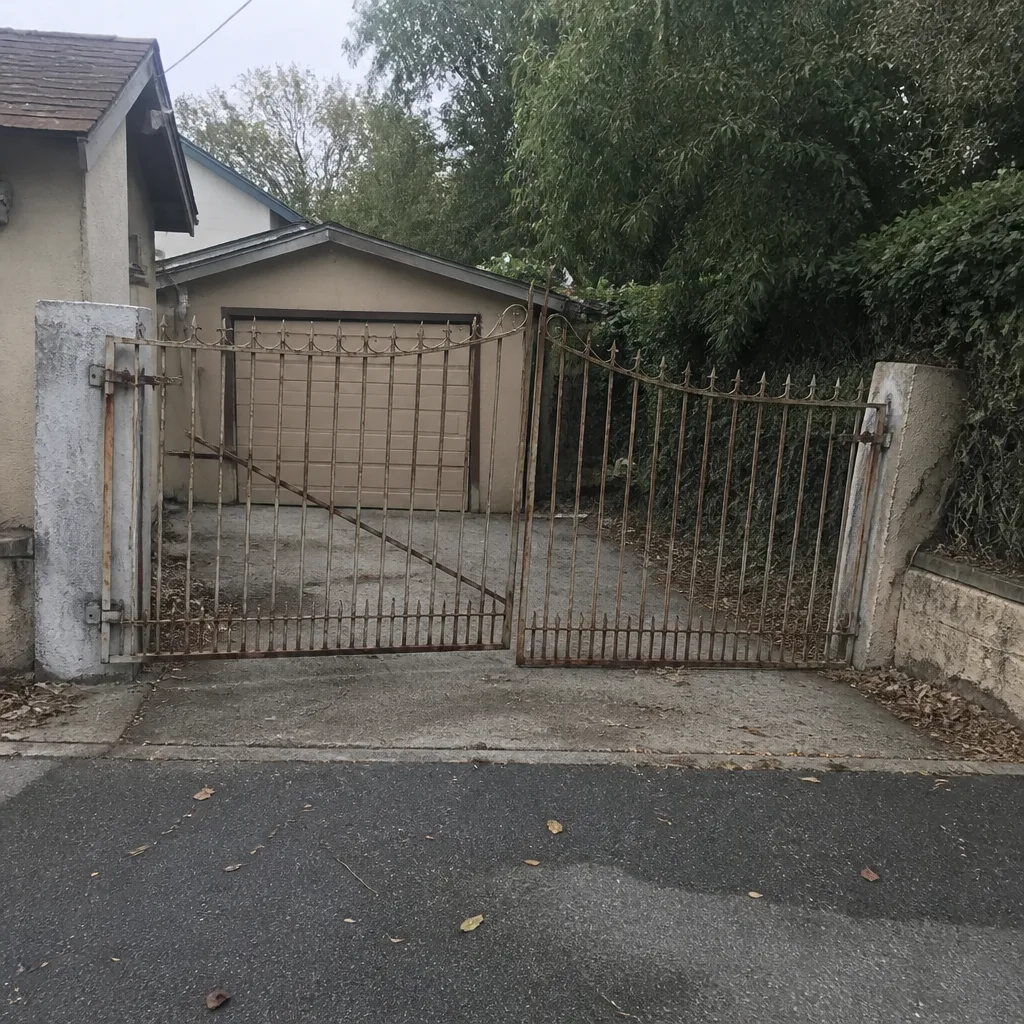
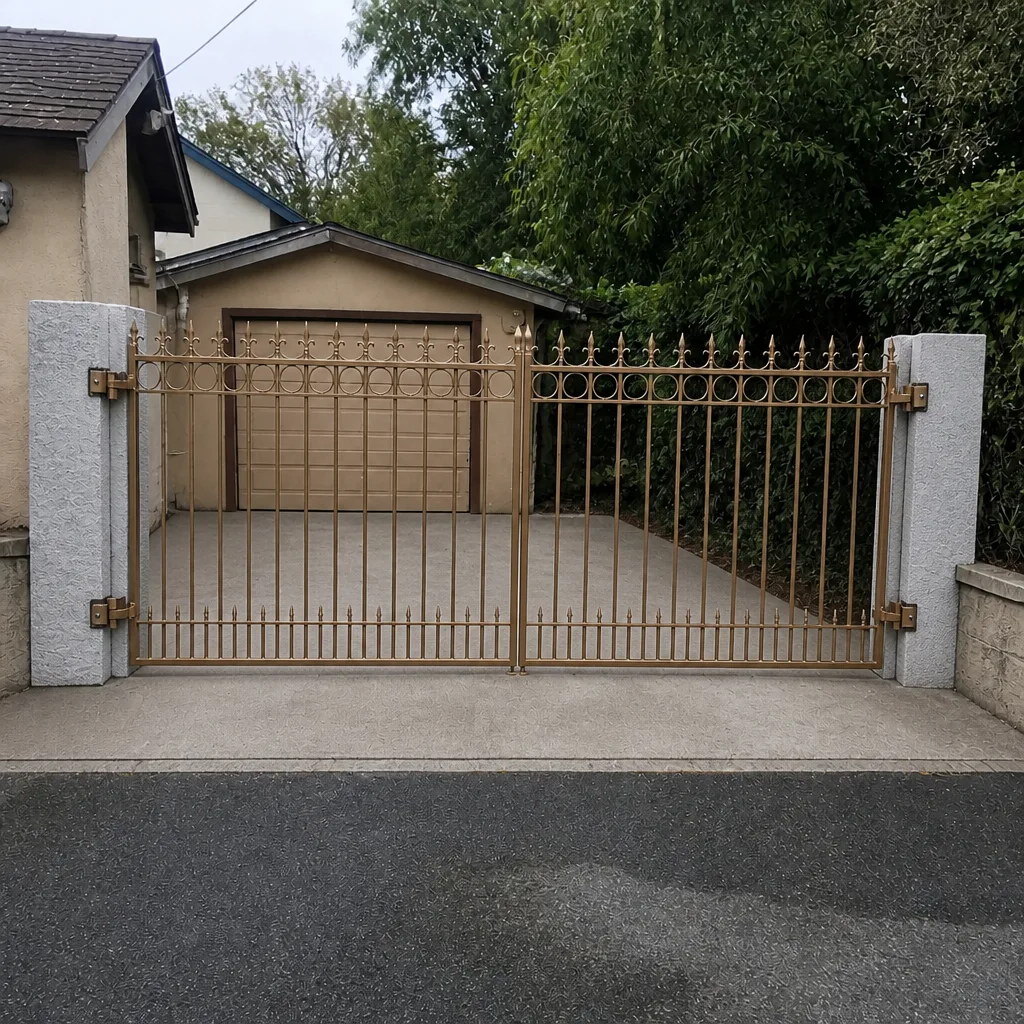
See the difference
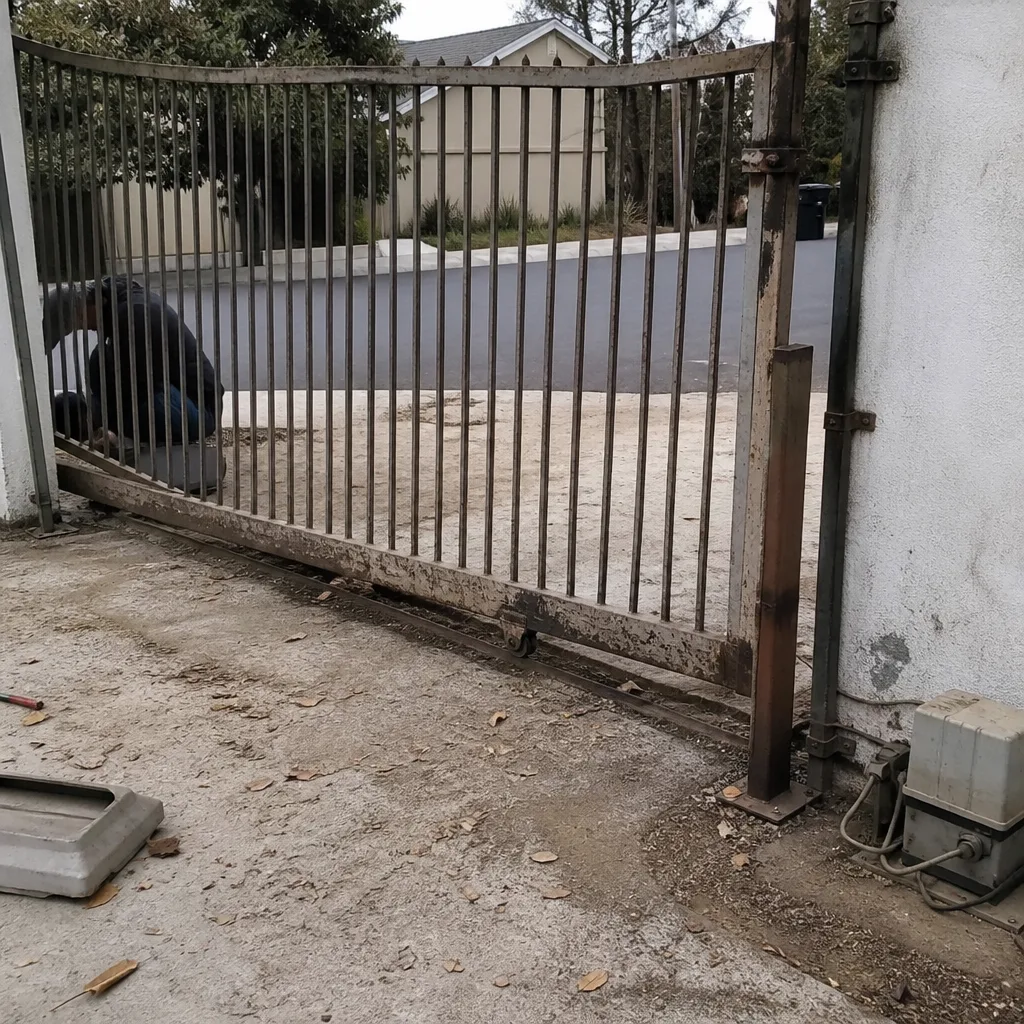 Before
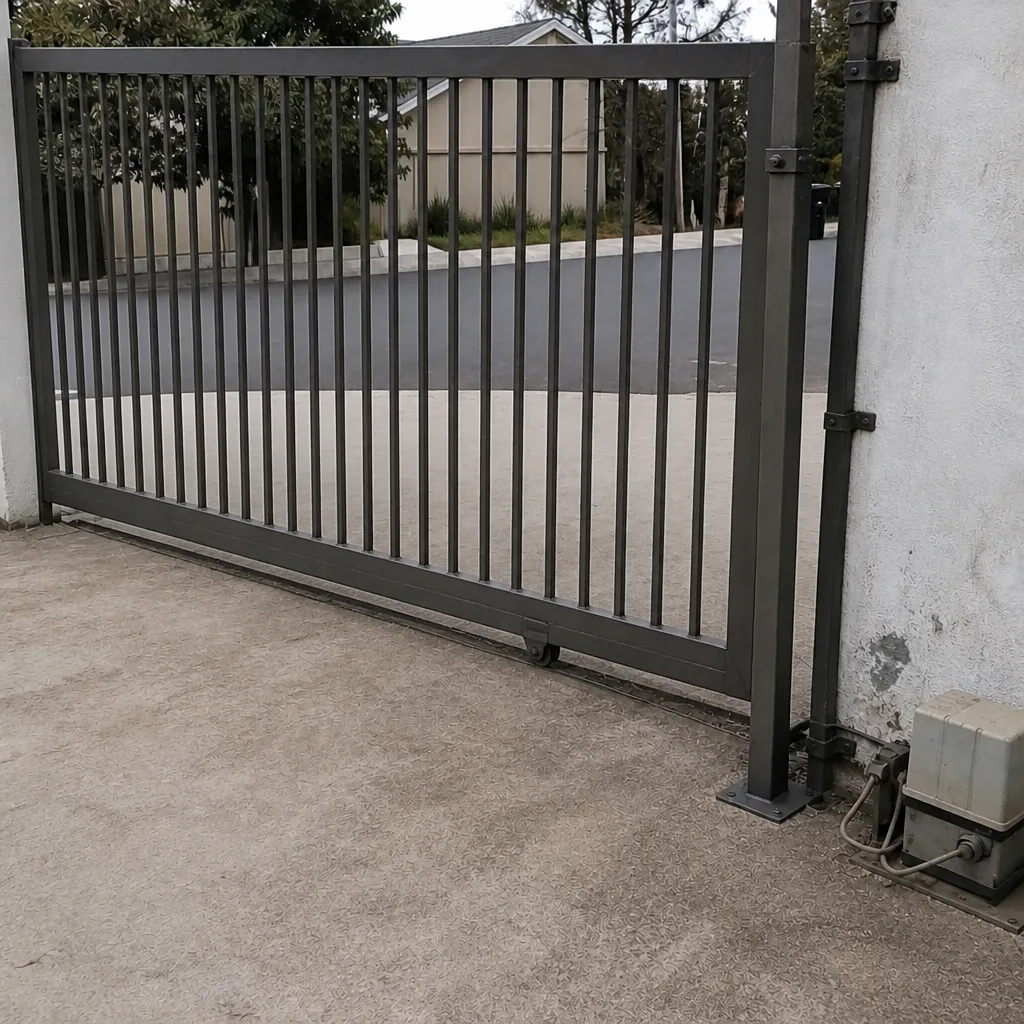 After
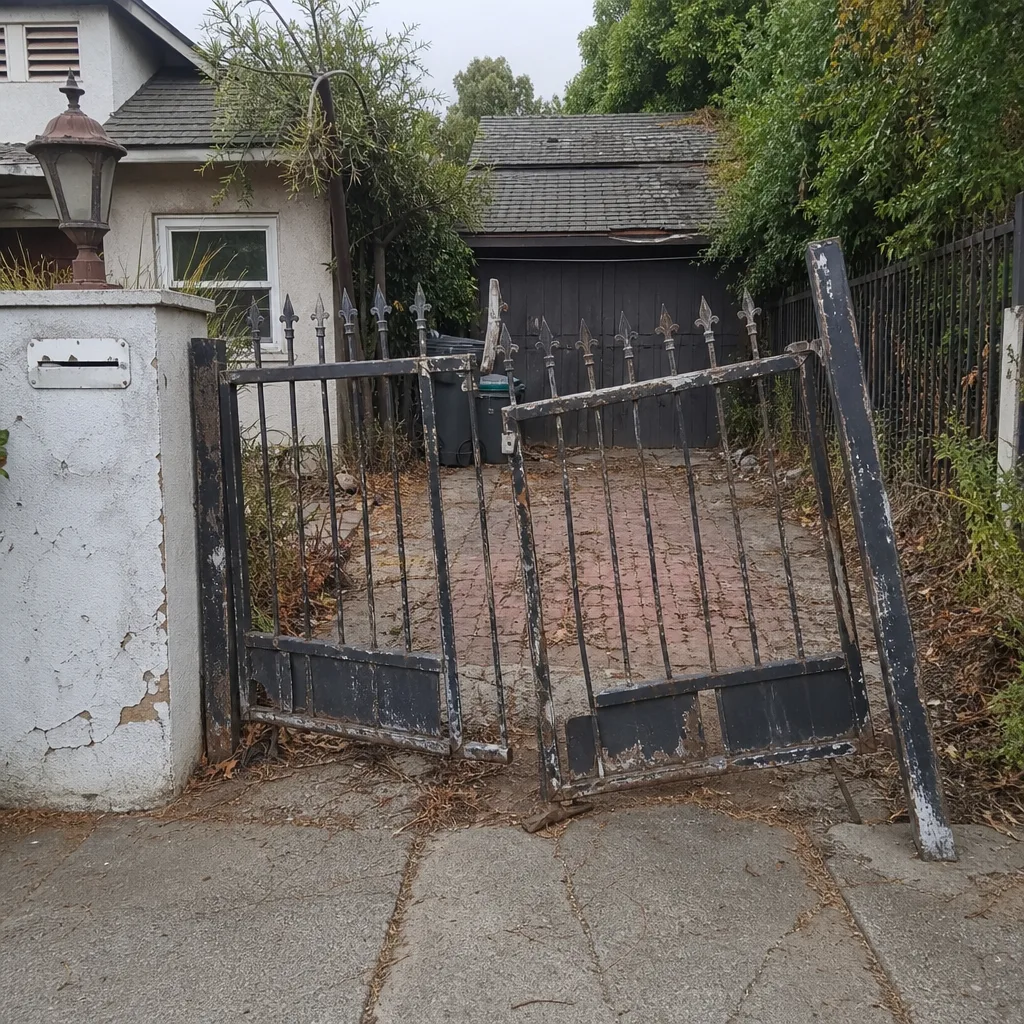 Before
 After
 Before
 After
Common Mistakes to Avoid
- Replacing the operator before checking the gate structure. If the post has shifted or the leaf is dragging, a new motor inherits the problem and burns out faster than the old one.
- Ignoring safety sensors and edges. Disconnecting a safety device to keep the gate running is a liability trap. In Highland Park, with its narrow hillside driveways, a gate that closes on a vehicle or person is a serious risk.
- Using generic replacement parts on brand-specific systems. A universal control board may work for a month. Then the miscommunication with limit switches and remotes appears, and you’ve spent money twice.
- Fixing symptoms instead of finding the root cause. A grinding hinge gets lubricated and quiets down. But if the hinge is grinding because the post is leaning, the lubrication only buys a few weeks.
- Attempting structural repairs without proper footings. Digging out a leaning post and repacking it with fresh concrete produces the same problem in a year. Proper footing depth and curing are required.
- Skipping the permit and historic review on a visible street-facing gate. In a historic district, an unapproved replacement can lead to a stop-work order and fines. It’s cheaper to check first.
- Opting for the cheapest bid without checking gate-specific experience. A low-price contractor who doesn’t know your gate’s brand may replace parts on a guess. That’s the most expensive option.
Frequently Asked Questions
Typical gate repair costs in Highland Park range from $250 for minor adjustments and limit-switch corrections to $1,800 for control board replacement or significant structural work. The written estimate sets the final price, and we quote everything before work begins. Call (855) 490-6590 for a specific number on your gate.
We answer 24/7 and dispatch crews from 7am to 7pm, Sunday through Friday. Same-day repair is often available when called in during dispatch hours. Call (855) 490-6590 and we’ll tell you exactly when a technician can be there.
We service Viking, DoorKing, Elite, and Ghost Controls systems, along with LiftMaster, FAAC, BFT, Linear, and Mighty Mule. Gate specialists arrive knowing the failure patterns of your specific brand rather than learning about it on-site.
Repair is usually the right call if the gate structure is sound and the operator is under ten years old. Replacement makes sense when the frame is rusted through, the operator is obsolete, or multiple major components have failed. We’ll tell you which side of the line you’re on and show you the numbers for both options.
Most repair work on existing gates doesn’t require a permit. Replacement, new automation systems, or structural changes may, especially in historic districts. Ask your city’s building department what applies to your address before starting a project.
Grinding usually means mechanical wear in a hinge, roller, or track. If the sound started recently, dirt and dust intrusion in Highland Park’s dry climate is a common contributor. Ignore it long enough and the worn component will damage adjacent parts, turning a small repair into a larger one.
When to Call a Professional
Call a gate specialist when your gate won’t open at all, when it moves erratically, when the motor runs but the gate doesn’t move, or when the gate has visibly sagged or shifted. Also call when safety sensors or auto-reverse features aren’t working properly. Automated gates involve electrical systems and heavy moving parts that can cause serious injury if mishandled. A trained professional has the equipment and experience to work on them safely. Sentinel Gate Repair offers free estimates in Highland Park. Call (855) 490-6590 and describe what your gate is doing. We answer 24/7, and if you need a technician, fast dispatch runs from 7am to 7pm, Sunday through Friday.
The Bottom Line
Gate repair in Highland Park is a diagnostic process shaped by hillside terrain, seasonal soil movement, and the specific operator brand installed on your property. Electrical problems, mechanical wear, and structural shift each present differently and require different responses. Fixing symptoms without addressing the underlying cause wastes money, regardless of the repair cost. A gate specialist with brand-specific knowledge and local familiarity identifies the root cause on the first visit, quotes the work upfront, and treats your gate as entry infrastructure rather than a simple mechanical nuisance.
Written by the team at Sentinel Gate Repair, serving Highland Park since 2016.