
Last updated November 4, 2026
 Wrought iron
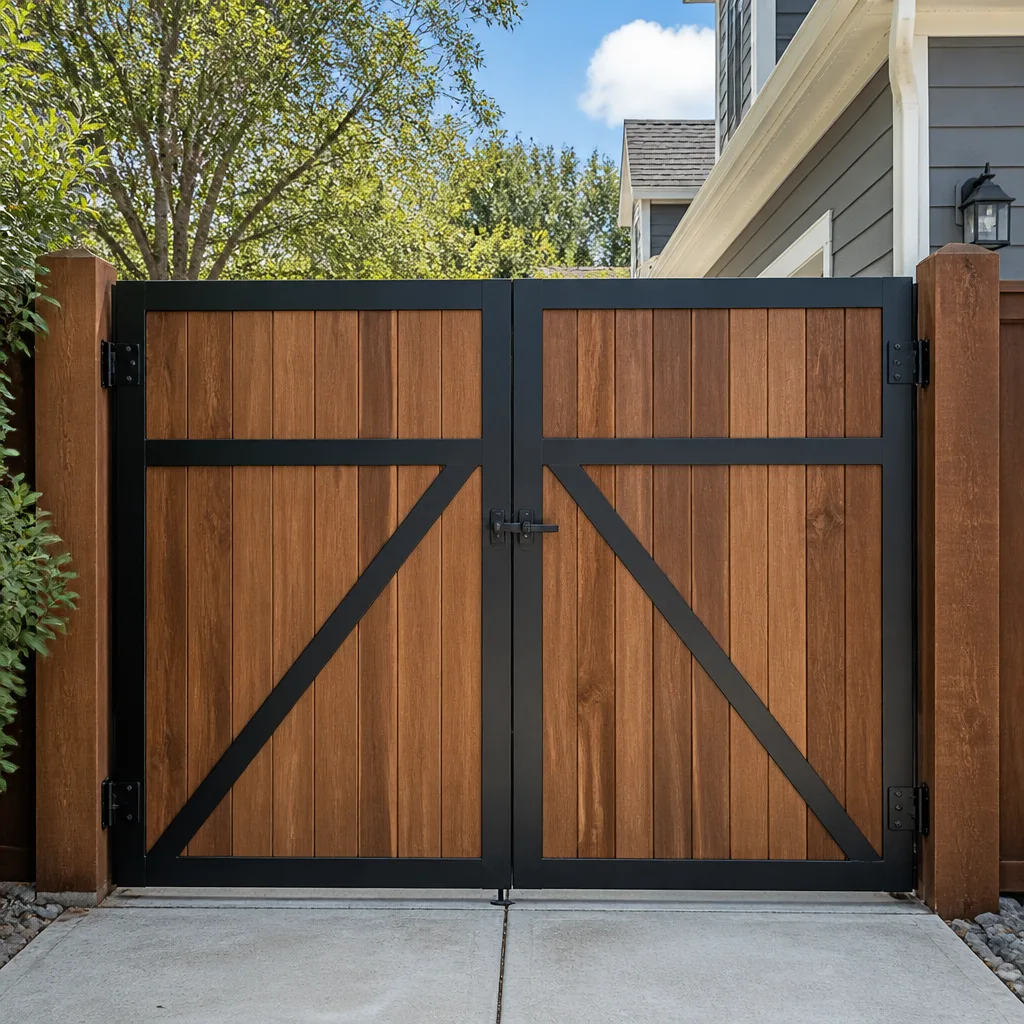 Wood & steel frame
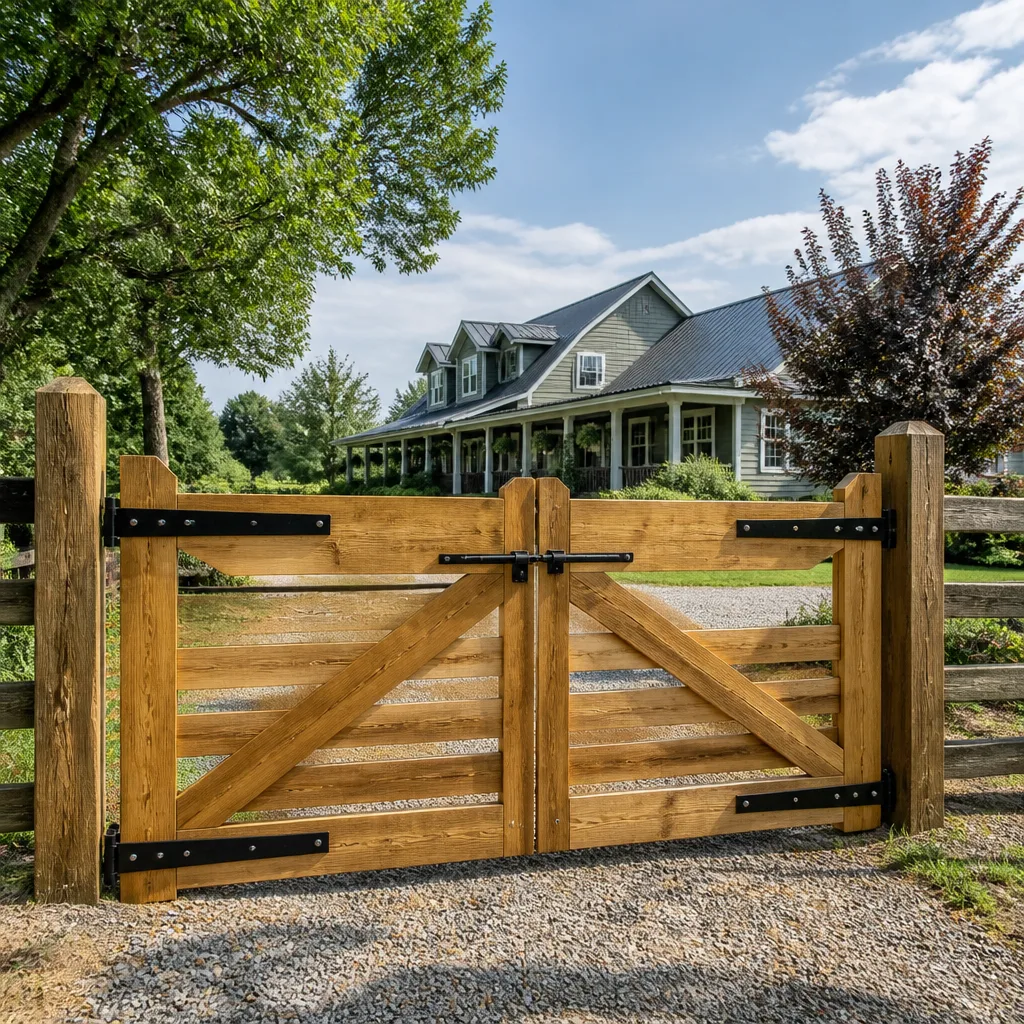 Farm & ranch
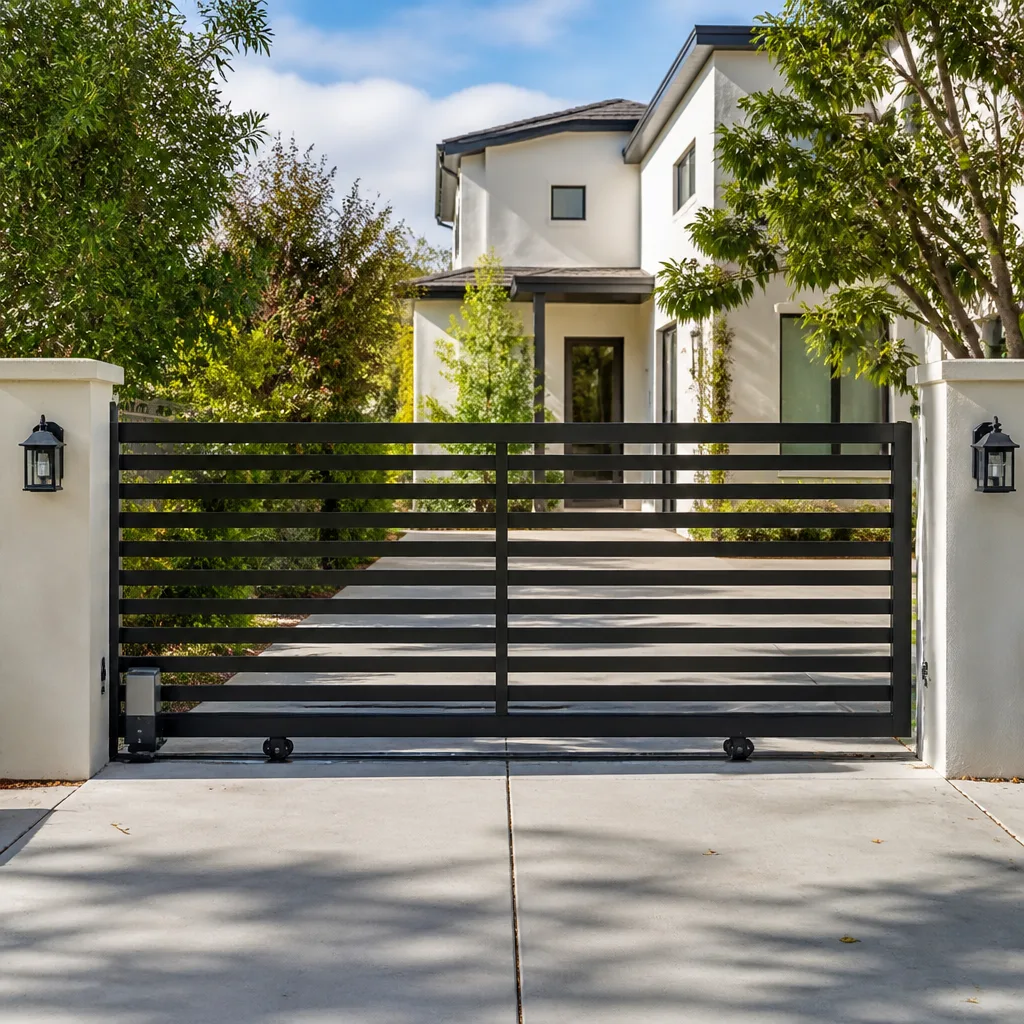 Sliding driveway gates
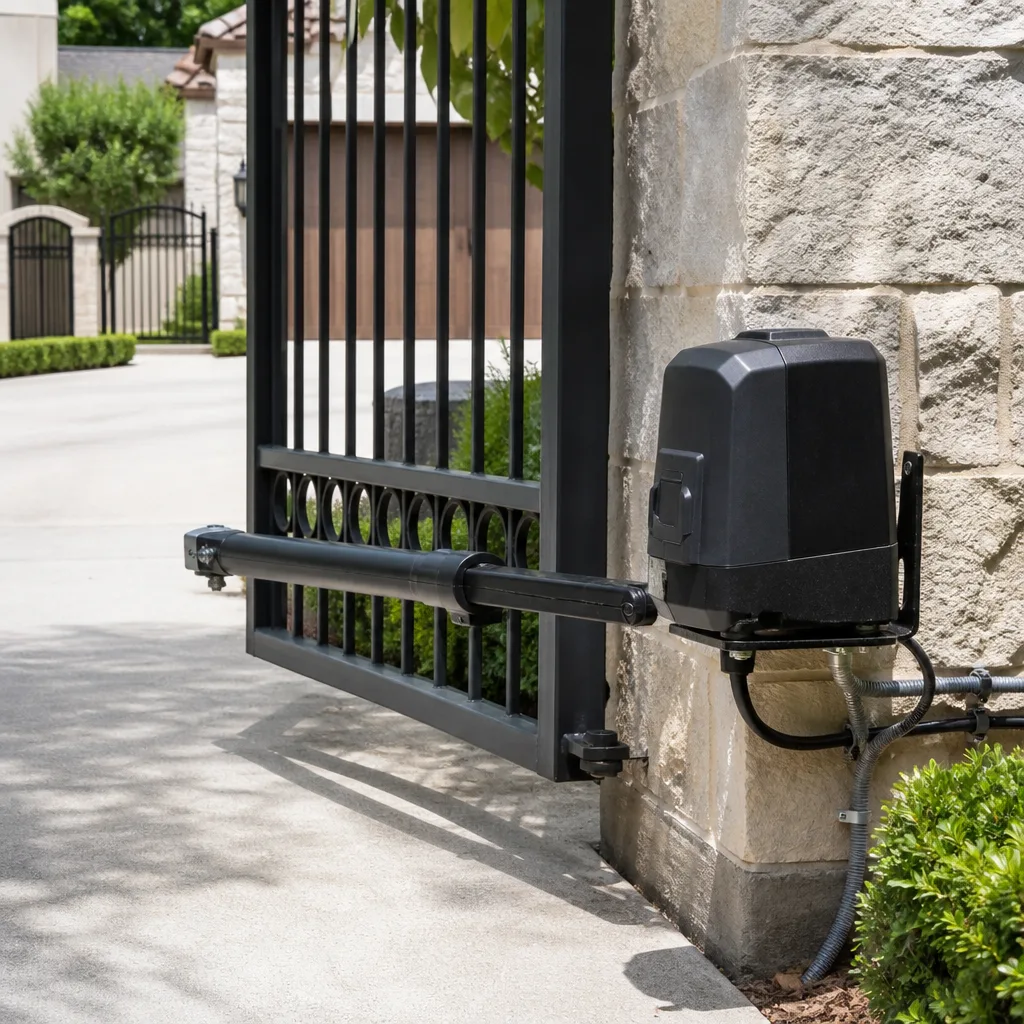 LiftMaster operators
Free on-site gate assessment - hinges, posts, and your LiftMaster or Nice gate operator checked before anything is quoted
The assessment is free and the quote is the invoice.
Get your free estimateGate Repair Emergency Preparedness Guide for Highland Park Homes
Most Highland Park homeowners never think about their gate until something goes wrong, and when it does, the failure mode matters as much as the breakdown itself. A gate that fails closed traps your vehicles and blocks emergency access, while a gate that fails open removes the security barrier you rely on. This guide explains both scenarios, how to identify which one your system uses, and what to do in the first thirty minutes after a failure. You’ll learn the manual release procedures for the most common operators in Highland Park, what information to document now before you need it, and how to communicate a gate emergency to a specialist so the first visit is the diagnostic visit, not just a getting-acquainted trip.
Quick Answer
Gate emergency preparedness in Highland Park means knowing your operator’s manual release procedure before a failure occurs, documenting your system’s make and model, and understanding whether your gate fails open or fails secure when power is lost. The homeowners who recover fastest from a gate emergency are the ones who have tested the manual release mechanism once, stored the operator information in an accessible spot, and have the phone number for a gate specialist who knows their brand. Call (855) 490-6590. We answer 24/7. Fast dispatch from 7am to 7pm, Sunday through Friday.
Styles & brands we work with
- Wrought iron
- Wood & steel frame
- Farm & ranch
- Sliding driveway gates
- LiftMaster operators
Table of Contents
- How to Manually Release Your Gate Operator by Brand
- Fail Safe vs. Fail Secure: Know Your Gate’s Default Position
- The Emergency Documentation Checklist
- Temporary Security When Your Gate Fails Open
- How to Communicate a Gate Emergency to a Specialist
- Highland Park-Specific Factors That Affect Gate Emergencies
- What to Do During a Santa Ana Wind Power Outage
- Common Mistakes to Avoid
- When to Call a Professional
How to Manually Release Your Gate Operator by Brand
Every automated gate has a manual release mechanism that disconnects the operator from the gate leaf so you can move the gate by hand. The procedure varies by brand, and forcing the wrong component can damage the drive mechanism or the control board. We work on all the major residential gate systems in Highland Park, including Ghost Controls, DoorKing, Elite, and Mighty Mule, so we’ve seen what happens when a homeowner guesses and gets it wrong. Here’s what you need to know for the operators we encounter most often in this area.
The manual release is a mechanical disconnect, not an electronic function. It works even when the power is out. What it doesn’t do is reset the operator or fix a failed control board. Your goal when using it is to move the gate safely out of the way without bending the drive rail, stripping a gear, or losing the limit settings that tell the operator where the open and closed positions are.
LiftMaster manual release steps:
- Locate the release handle. On most LiftMaster swing and slide gate operators, a red or yellow handle hangs from the drive rail or sits on the operator housing.
- For slide gates, pull the handle straight down and hold it while you push the gate leaf manually along the track. Release the handle only after the gate is fully where you want it.
- For swing gate operators, the release is usually a lever near the drive arm. Move it to the disengaged position, then swing the gate leaf by hand.
- Never use the operator motor to move the gate while the release is disengaged. Re-engage the mechanism before sending any power command.
FAAC manual release steps:
- FAAC hydraulic operators have a manual release valve on the operator body. It’s usually a small hex-shaped stem or a keyed release that requires the FAAC release key.
- Turn the release valve counterclockwise one half-turn. Do not open it fully, which can cause hydraulic fluid to leak past the seal.
- Move the gate leaf by hand to the desired position.
- Close the release valve firmly before restoring power. A partially open valve causes the gate to drift or lose position.
Viking manual release steps:
- Viking operators use a mechanical disconnect on the drive assembly. Look for a pull chain or a metal release pin near the gearbox.
- Pull the disconnect handle until it locks into the open position.
- Move the gate by hand. On Viking slide gate units, the gate should move with moderate push force. If it resists heavily, check for a track obstruction before forcing it.
- Snap the disconnect handle back to re-engage. Do this with the gate fully closed or fully open, not mid-travel.
Linear manual release steps:
- Linear swing gate operators have a release knob on the side of the actuator housing. It pulls outward to disengage the internal gear train.
- Rotate the knob to the release position and hold it while moving the gate leaf.
- Important: Linear operators with a torque limiter may re-engage themselves if the knob isn’t held in the release position throughout the movement.
- Return the knob to the engaged position and confirm the gate holds its position before restoring power.
We recommend testing your manual release once during daylight hours, when there’s no emergency and no pressure. A five-minute test now saves a forty-minute struggle at night. If you test it and find the release is stiff, missing a key, or the gate won’t budge, that’s a sign the system needs a service visit before a real emergency makes the problem worse.
Fail Safe vs. Fail Secure: Know Your Gate’s Default Position
The most important thing to know about your gate before an emergency is what it does when it loses power or the operator fails. Some gates are configured to fail safe, which means they de-energize to an open position. Others are configured to fail secure, which means they remain locked closed. Both configurations exist in Highland Park, and the right choice depends on access needs, fire access requirements, and security priorities.
Fail safe gates open automatically when power is cut. This is common in commercial and HOA settings where emergency vehicle access is a priority, but we see it on residential properties too, particularly where the gate is the only access point and the homeowners can’t risk being trapped. The tradeoff is obvious: a power outage leaves your property open. In Highland Park, where Santa Ana wind events have caused extended outages, a fail-safe gate can leave a property unsecured for hours unless you have a manual lock or another physical barrier ready.
Fail secure gates remain locked when power drops. These rely on a battery backup or a mechanical lock to hold the gate closed. A fail-secure gate protects the property during an outage but creates a different problem: you can’t get your own vehicles in or out without using the manual release. If you don’t know where the release is, you’re locked out of your own driveway.
How to identify which mode your gate uses: cut power to the operator at the breaker and watch what the gate does. If it stays put, you have a fail-secure setup. If it releases and can be pushed open, you have a fail-safe setup. Do this when you have time to test, not during an emergency.
Neither mode is wrong. The problem is not knowing which one you have. A homeowner who assumes their gate fails secure and discovers during an outage that it fails safe has an unsecured property and no plan. A homeowner who assumes fail safe and finds themselves locked in has a different problem. Know your mode, and prepare the right response for it.
The Emergency Documentation Checklist
When you call Sentinel Gate Repair about a gate emergency, the single biggest timesaver is having the right information about your system readily available. In high-pressure situations, most people remember the gate is broken but not what brand it is, what model the operator is, or where the control board lives. Here’s what to document now, before a failure happens.
What to write down and keep near the gate or in your phone:
- The operator brand and model number, usually printed on a metal tag or label on the operator housing. If you have a Ghost Controls, DoorKing, Elite, or Mighty Mule system, the model number tells us which control board revisions we’re dealing with.
- The control board part number, visible when the operator cover is open. This number changes between production runs, and having it lets us bring the right replacement board before we even arrive.
- Your access code or keypad programming information. If the keypad stopped working because the code was lost or changed, knowing the original programming sequence saves diagnostic time.
- The phone number and name of the installer or company that last serviced the gate. If work was done recently, the installer may have warranty information or service history that matters.
- A photo of the operator and control board, taken now while everything works. When the gate fails, this photo is more useful than a verbal description of “the gray box near the fence.”
- The location of the manual release and any special keys or tools required to operate it.
For Highland Park homes with older gates, documentation is especially important because discontinued models and obsolete control boards require cross-referencing or board-level repair. A no-documentation gate from a brand that changed its product line means the technician has to open the housing, identify the components visually, and potentially order parts before any repair can happen. With documentation, the first visit is often the repair visit. In our experience, the customers who call us with documentation get resolved faster. That’s not a sales pitch; it’s a logistics fact.
Temporary Security When Your Gate Fails Open
When your gate fails in the open position, whether from a control board issue or a fail-safe de-energization, you have an access control problem until the repair happens. Your driveway is no longer protected from drive-in vehicle access. You need a temporary physical measure that doesn’t require the operator to function.
The simplest and most reliable temporary barrier is a heavy-gauge chain and padlock across the gate opening, secured to the gate frame and the adjacent post. This works for slide gates that are stuck open and swing gates that won’t close. Use a chain thick enough that bolt cutters can’t remove it quickly, and padlock it at a height that requires stopping and getting out of a vehicle to reach. This doesn’t stop a determined intruder, but it stops the casual drive-in that an open gate invites.
For properties where a chain isn’t practical, consider these alternatives in order of effectiveness:
- Locked drop bar or removable bollard across the driveway, if your Highland Park property has mounting hardware installed.
- Park a vehicle across the opening, blocking it partially or fully. This is inconvenient but effective for overnight security during a repair wait.
- Install temporary clamp-on reflectors or cones at the gate line to mark the opening, reducing the chance of an accidental drive-in at night.
- Notify your neighbors, especially if you live on a street where driveway access is shared or easily confused. An open gate on a dark Highland Park street is a magnet.
None of these replace a working gate. They’re stopgaps until gate repair restores the system. Have the chain and padlock on hand before you need them. We’ve seen too many cases where a gate failed open at dusk and the homeowner had no barrier until morning.
How to Communicate a Gate Emergency to a Specialist
When you call a gate repair specialist, the way you describe the problem determines whether the technician arrives ready to work or arrives to take notes and order parts. Here’s what to say when you call, in the order that matters to the person on the other end.
- State the failure mode. “The gate is stuck open and won’t close.” “The gate is stuck closed and the motor hums.” “The gate opens halfway and stops.” These statements tell us more than “the gate is broken.”
- Give the brand and model number. If you documented these as we recommend earlier, you’ll have them ready. “It’s a DoorKing 9150 slide gate” tells us what control board we’re likely dealing with.
- Describe when it happened and what changed. “It stopped working after the power came back from an outage.” “It worked fine this morning and now the keypad doesn’t respond.” Recent events are diagnostic clues.
- Report any error codes or indicator lights. Many operators have a diagnostic LED that blinks in specific patterns. A “three blinks, pause, three blinks” pattern is meaningful to us even if you don’t know what it means.
- Mention if the manual release has been tested or used. If you’ve already released the gate and moved it manually, tell us. That’s not a problem; it’s useful information, and it changes what we check first.
- Confirm whether the property is secured. If the gate is stuck open and you’ve chained it, say so. If it’s stuck closed and you need vehicle access, tell us that so we can prioritize the call accordingly.
The goal is to let the technician make the right diagnosis before turning the key in the van. We arrive in Highland Park with the right parts, the right board, and the right plan. That’s the difference between a specialist who knows the brands and a generalist who has to guess.
Highland Park-Specific Factors That Affect Gate Emergencies
Highland Park’s climate and geography create specific conditions that affect gate systems in ways that differ from other parts of Los Angeles. The mild winters mean we don’t deal with freeze-thaw problems or ice damage, but we do see something else that many homeowners don’t think about: heat and dust. Highland Park sits in a warm inland corridor, and during extended hot spells, the thermal expansion of metal gate frames and rails changes the way gates move. A gate that runs perfectly at 72 degrees can bind or trip its safety sensor at 95 degrees because the metal has expanded enough to change the track tolerance.
Dust and airborne grit from the surrounding hills accumulate on drive rails, hinges, and sensor lenses. In our experience on Highland Park properties, slide gate tracks fill with dust faster than homeowners expect, and the buildup causes the gate to labor against the motor, eventually tossing a current-sense error. A simple track cleaning resolves most of these calls, but the damage is already done if the gate was forced to run against resistance for weeks.
Another Highland Park-specific issue is drive slope. Many properties on the hillside streets have driveways with a noticeable grade. Gates on sloped driveways experience more load on the hinges and more wear on the operator because the gate is constantly fighting gravity. A gate that’s light and easy to push on flat ground may be heavy and resistant on a slope, which changes the manual release procedure and the amount of force needed to move it by hand. If your gate is on a slope, test the manual release and note how much muscle it takes. You don’t want to discover that during an emergency.
For homeowners who are also considering a replacement, electric gate repair or a new installation should factor in the slope and the heat expansion when specifying the operator. An undersized operator on a sloped driveway fails sooner and struggles more than the same unit on flat ground. Highland Park homes deserve gate systems sized for the actual site conditions, not a generic spec sheet.
What to Do During a Santa Ana Wind Power Outage
Highland Park has experienced power outages during strong Santa Ana wind events, and automated gates are directly affected. When the grid goes down, your gate operator loses its primary power source. What happens next depends on your setup. Some systems have battery backup and continue operating normally for a period. Many do not, and without power, the gate either stays where it is or releases depending on its fail configuration.
If your gate has battery backup and it’s working, avoid cycling the gate unnecessarily during the outage. Each open-close cycle draws down the battery, and if the outage lasts long, you could drain the backup and leave yourself with a dead operator and a gate mid-position. Use the gate only when you actually need to move a vehicle.
If your gate does not have battery backup and the power is out, don’t force the gate against the operator. The motor won’t move without power, and trying to push a motorized gate electrically into motion can damage the drive components or strip the gear train. This is the exact scenario where homeowners damage their operator trying to force it. Instead:
- Locate the manual release handle, lever, or valve that you tested during your preparedness practice.
- Disengage the operator using the procedure for your brand as described earlier in this guide.
- Move the gate by hand to the desired position.
- If the gate must remain open for vehicle access, chain it or secure it manually if you can’t leave it unattended.
- Re-engage the operator only when power returns, and run one full open-close cycle while watching for unusual sounds or movements before trusting the system fully.
After power restoration, have the operator checked if it behaves erratically. Power spikes and low-voltage recovery can damage control boards, and a gate that ran fine before an outage may develop a board fault shortly after. If you’re in Highland Park and your gate acts up after a wind-related outage, call us rather than resetting the board yourself. A board that’s been spiked may work temporarily then fail again, usually at the worst possible moment.
Common Mistakes to Avoid
- Forcing the gate leaf against a powered operator. When the motor is engaged, pushing the gate by hand can bend the drive arm, strip gears, or break the limit switch mechanism. This mistake turns a simple power issue into a full operator replacement. Always use the manual release first.
- Assuming your gate fails the way you want it to. If you haven’t tested the fail mode, you don’t know whether an outage leaves your property open or leaves you locked out. Test it once under controlled conditions and prepare accordingly. We see this assumption cause the most avoidable emergencies in Highland Park.
- Ignoring unusual sounds or movements. A gate that scrapes, rattles, or hesitates is warning you that something is wearing. Waiting until full failure costs more and leaves you in an emergency instead of a scheduled repair. The scraping sound is cheaper to fix than the aftermath.
- Using the wrong key or tool on the manual release. FAAC and some other European operators require a specific release key or hex wrench. Using pliers or forcing the release with the wrong tool strips the mechanism and may require operator disassembly to fix. Know what your system needs before you need it.
- Not documenting the system information. “It’s a black gate” doesn’t help us bring the right control board. Without model and board numbers, the first visit is often a documentation visit, and your repair waits on parts. Five minutes of documentation now saves days of downtime later.
- Leaving a failed-open gate unsecured. An open gate on a Highland Park property is an invitation to drive-in theft or unwanted visitors. A chain and padlock costs under $50 and takes ten minutes to install. The risk of doing nothing is not acceptable.
- Resetting the control board repeatedly instead of calling. If your gate trips its breaker, throws a code, or stops responding, and you reset the board and it works briefly before failing again, the underlying problem is still there. Repeated resetting can damage the board further. A specialist diagnosis is cheaper than waiting for the board to die completely.
When to Call a Professional
Some gate problems are safe to investigate on your own, and some require a specialist who knows the electrical and mechanical systems involved. If you’re dealing with a motor that won’t respond, a control board showing error codes, a gate that moves erratically, or an electric gate repair scenario involving low-voltage wiring or access control components, don’t open the operator housing without electrical training. The wiring carries voltage even when the gate is not moving, and a misconnected wire can create a fire hazard or damage the control board beyond repair. If the gate has come off its track, or if you’re dealing with a heavy swing gate that won’t hold position, the force involved is enough to cause serious injury if it moves unexpectedly. A gate that has fallen or shifted is not a DIY project, and neither is a control board failure with repeated error codes. Sentinel Gate Repair offers free estimates in Highland Park. Call (855) 490-6590. We answer 24/7. Fast dispatch from 7am to 7pm, Sunday through Friday.
See the difference
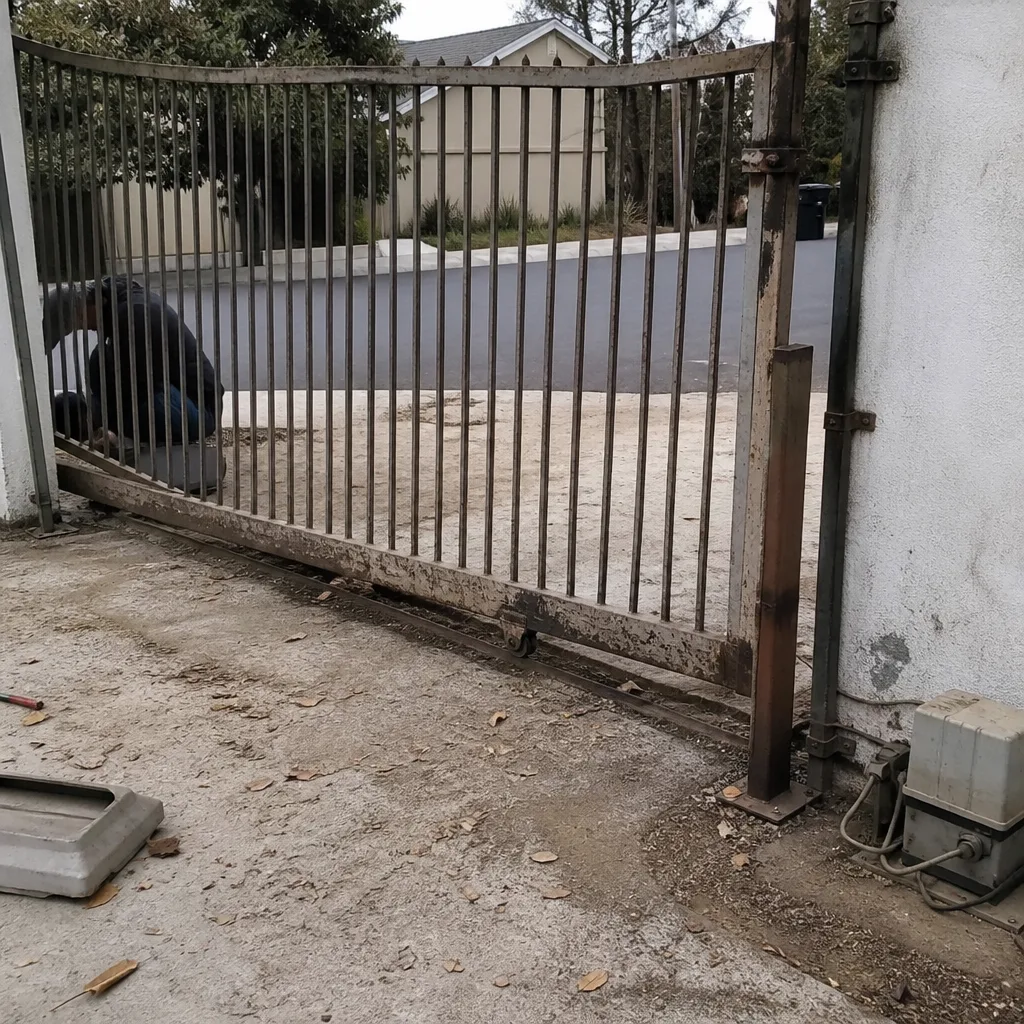 Before
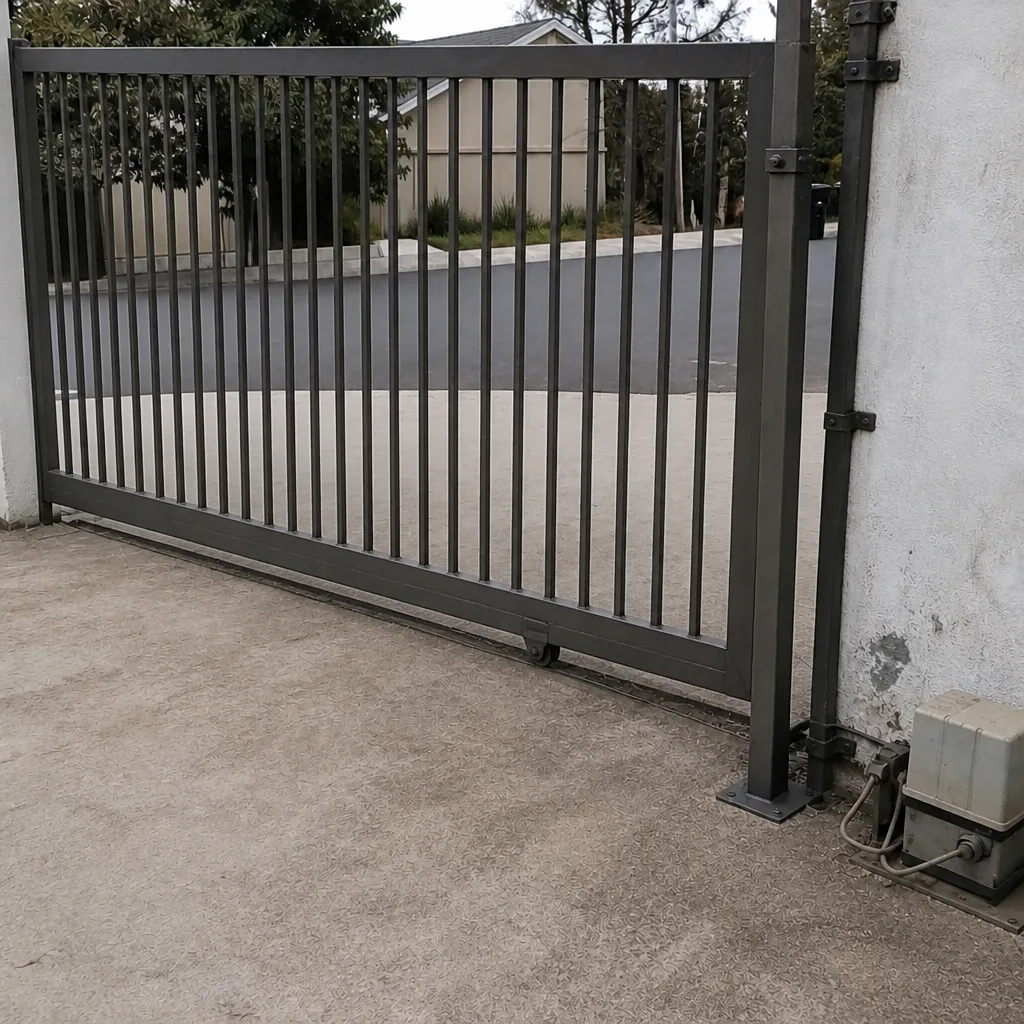 After
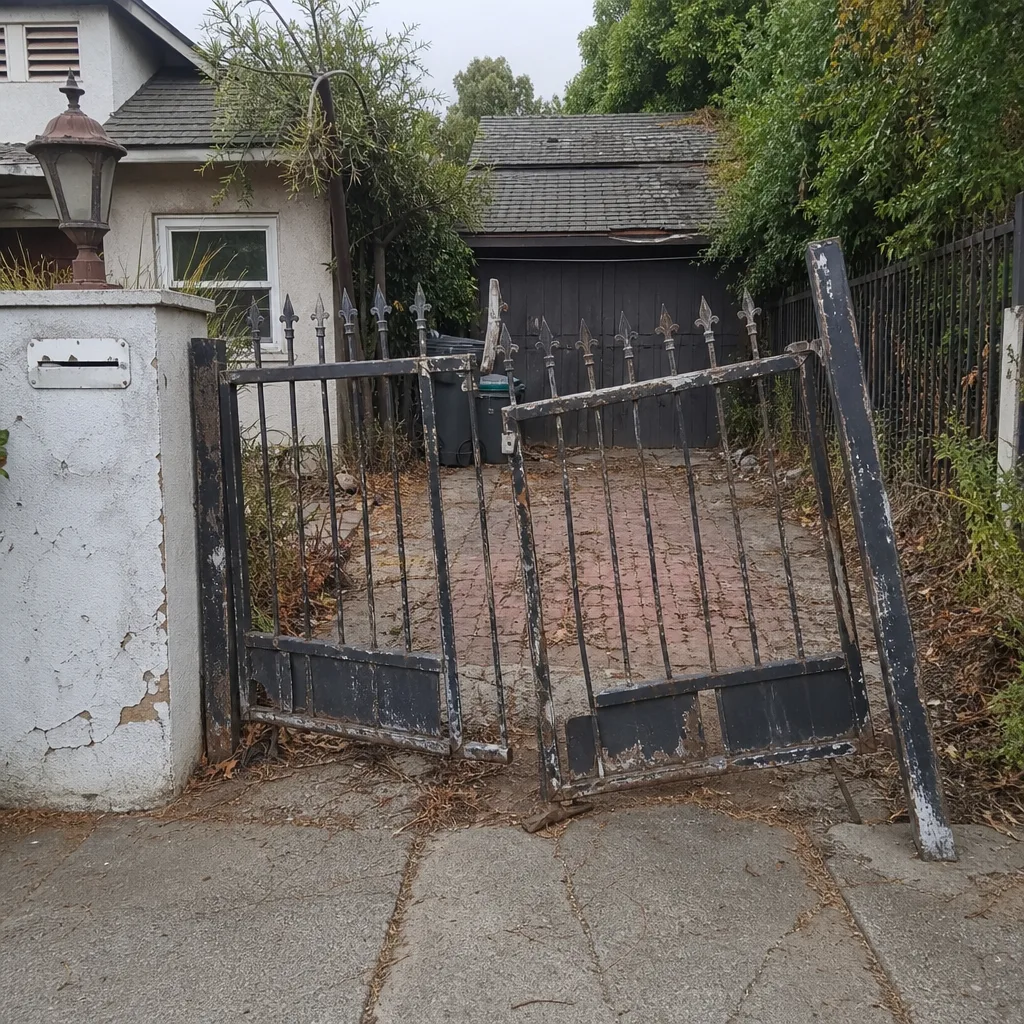 Before
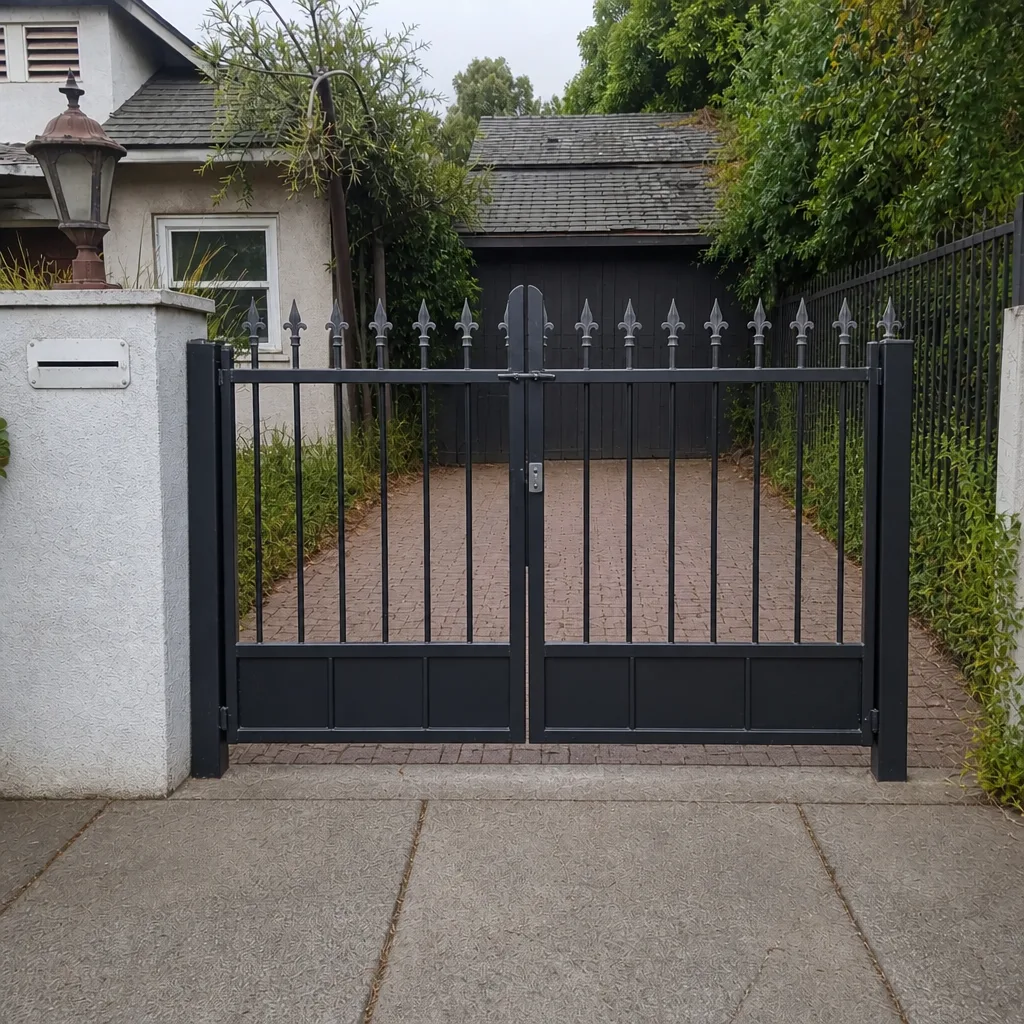 After
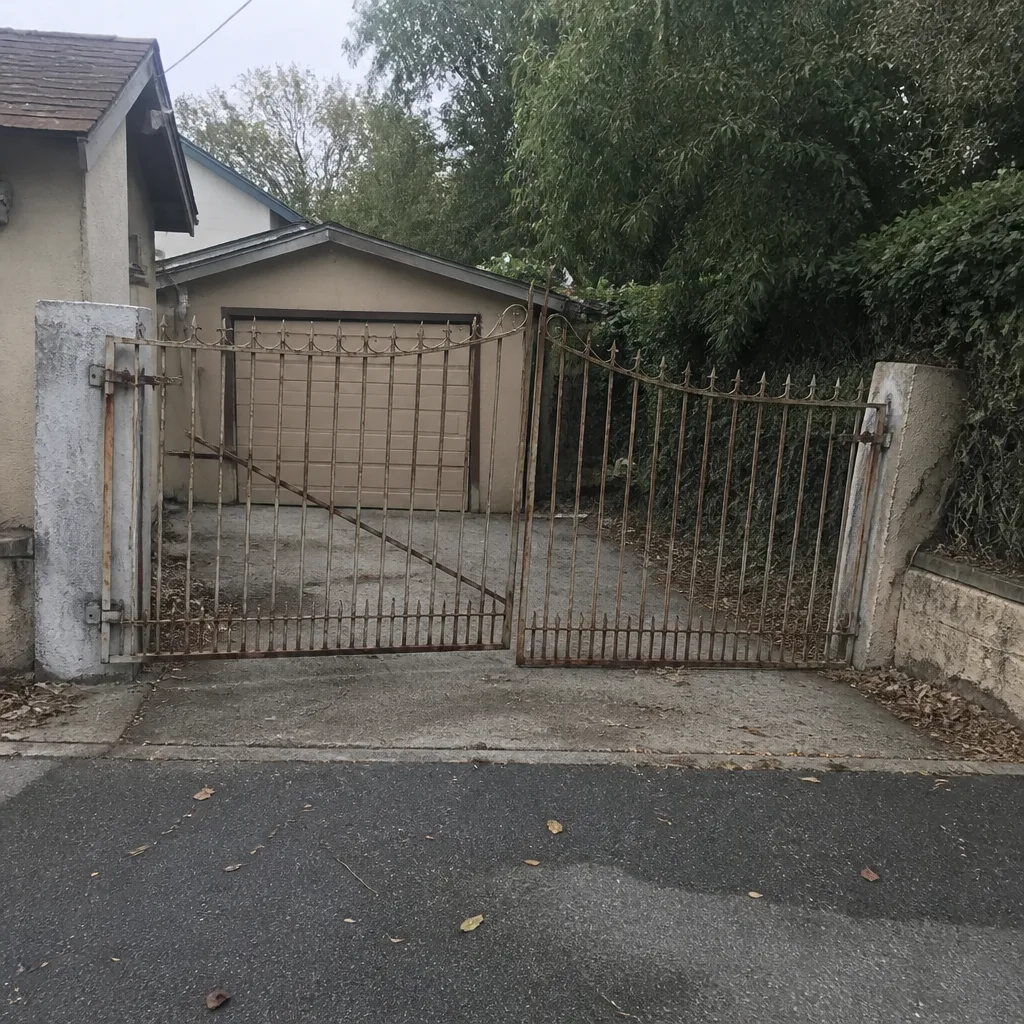 Before
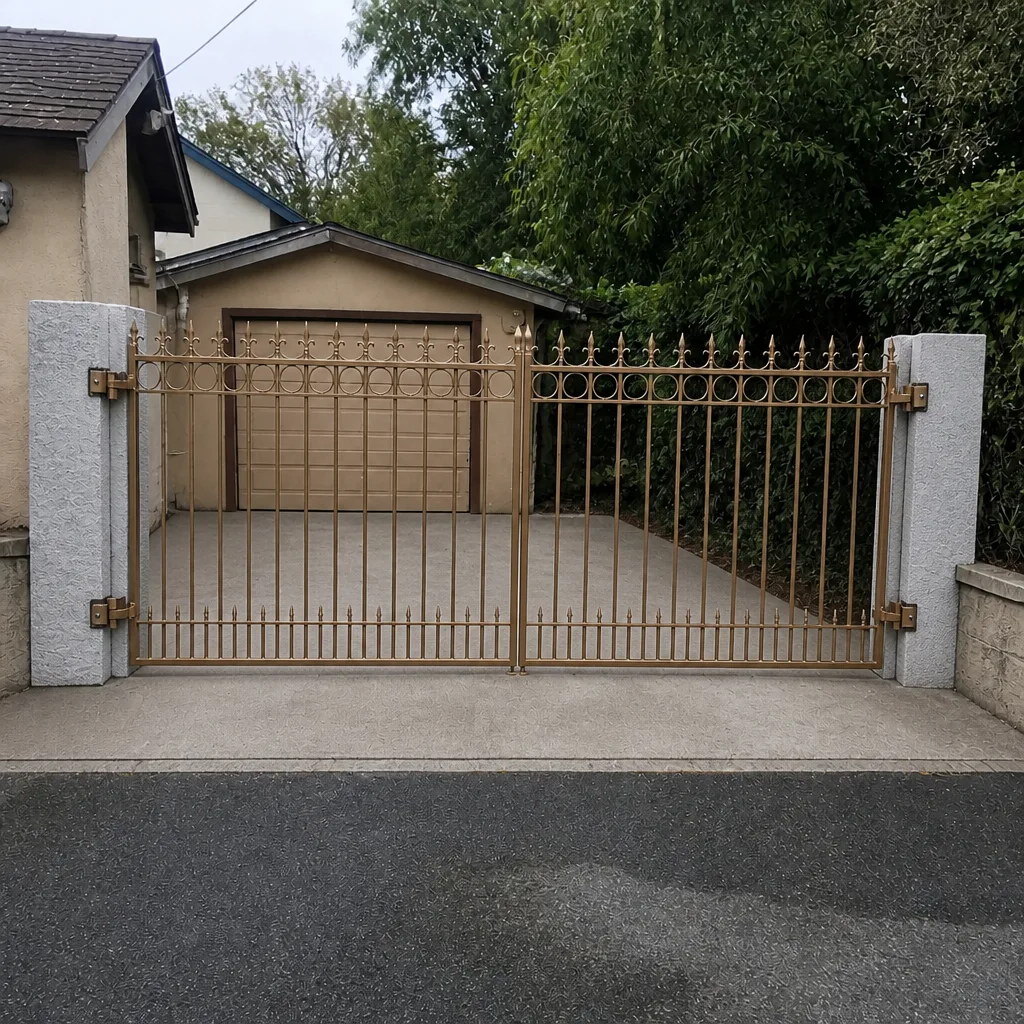 After
Frequently Asked Questions
First, determine which failure mode you have: is the gate stuck open, stuck closed, or moving partially? Then check whether the operator has power and whether any error codes or indicator lights are showing. If you plan to move the gate manually, use the manual release procedure for your specific operator brand, not force. The first call you make should be to a gate specialist with your model number in hand.
Every automated gate has a manual release mechanism that disconnects the operator from the gate leaf. The release varies by brand: LiftMaster uses a pull handle, FAAC uses a valve or keyed release, Viking uses a disconnect handle, and Linear uses a release knob. Test your release before an emergency so you know where it is and how it works. Never force the gate leaf against the engaged operator.
It depends on your system’s fail configuration. A fail-safe gate de-energizes to an open position during a power loss, while a fail-secure gate remains locked closed. If your gate has battery backup, it may operate normally until the battery drains. Cut power to your operator once to test its default position so you know what to expect during an outage.
Emergency gate repair pricing depends on the failure mode, the parts required, and the operator brand. A simple track cleaning or sensor realignment costs less than a control board replacement or motor rebuild. The written estimate sets the final price after the technician diagnoses the system during the visit. The estimate is free, and the price is agreed before any work starts. Call (855) 490-6590 for an exact quote.
For emergency repairs, fast dispatch from 7am to 7pm, Sunday through Friday, means most Highland Park calls get same-day service. When you call, have your operator brand and model ready, along with a description of the failure. This lets the technician arrive with the right parts instead of diagnosing first and returning later. Call (855) 490-6590. We answer 24/7.
We work on LiftMaster, FAAC, BFT, Linear, Viking, Ghost Controls, DoorKing, Elite, and Mighty Mule systems. Our technicians are trained on each brand, so the diagnostic starts from familiarity with the system rather than from a generic gate repair checklist. If your gate runs on one of these operators in Highland Park, the fix starts with the right knowledge, not a guess.
The Bottom Line
Gate emergencies in Highland Park are manageable when you’ve done the preparation beforehand. Know your operator brand and how to release it manually. Know whether your gate fails open or fails closed when the power drops. Document the system information that lets a specialist arrive ready to work. Keep a chain and padlock available for the failed-open scenario during a repair wait. Test everything once during daylight, not during the emergency. And when the gate does fail, call a gate specialist who knows your brand and your neighborhood. Call (855) 490-6590. We answer 24/7. Fast dispatch from 7am to 7pm, Sunday through Friday.
Written by the team at Sentinel Gate Repair, serving Highland Park since 2016.